Overview
VRDrums is a playful virtual reality drumming application that enables users to create beats in immersive environments through intuitive controls and multimodal feedback linking movement, sound, and visuals. Personas and clearly defined pragmatic and hedonic requirements guided our design decisions. Iterative usability testing, combining qualitative and quantitative methods, showed consistently positive ratings across usability and experiential dimensions.
Role
Lead UX Designer
Scope
UX Concept
UI Design
UX Evaluation
UI Design
UX Evaluation
Platform
VR Application
Duration
~ 4 months
Tools
HTC Vive
Unity
C#
Blender
GitHub
Premiere
Adobe XD
Illustrator
After Effects
Miro
Unity
C#
Blender
GitHub
Premiere
Adobe XD
Illustrator
After Effects
Miro
Process
The work process was organized into six phases: Ideation, UX Instruments, Assets Supply, Unity/Programming, User Testing, and Presentation/Documentation. Each phase had defined work packages. We used a Kanban board to track progress and coordinate responsibilities across the team.
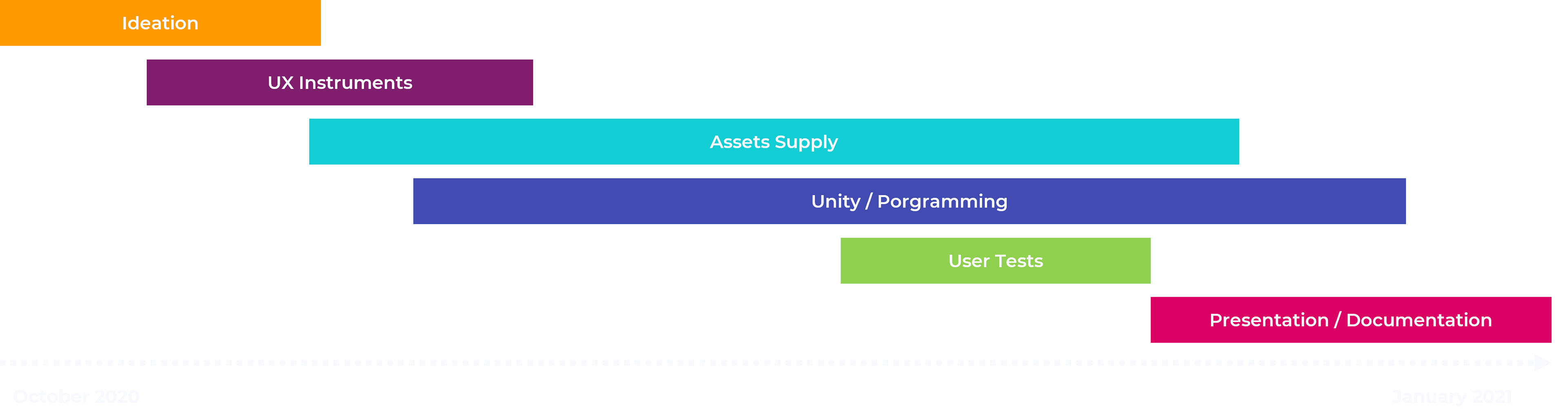
Process overview with overlapping phases
UCD Approach
Usability was central to VRDrums. We developed two personas representing our main user groups. From these, we defined functional and non-functional requirements and formulated ten core user stories addressing both practical and enjoyable aspects. A style guide maintained consistent visuals, including colors, gradients, fonts, and the logo.
VRDrums brand
VRDrums brand
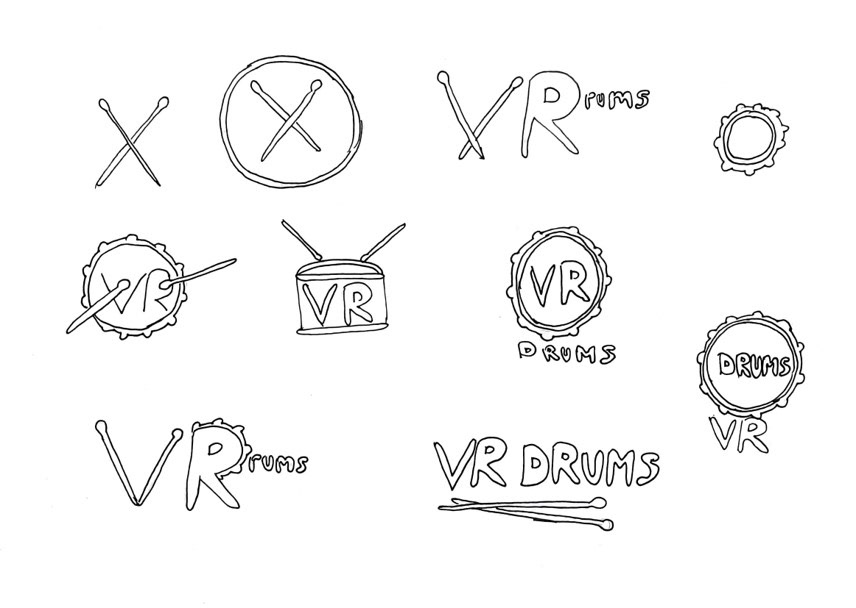
Logo sketches
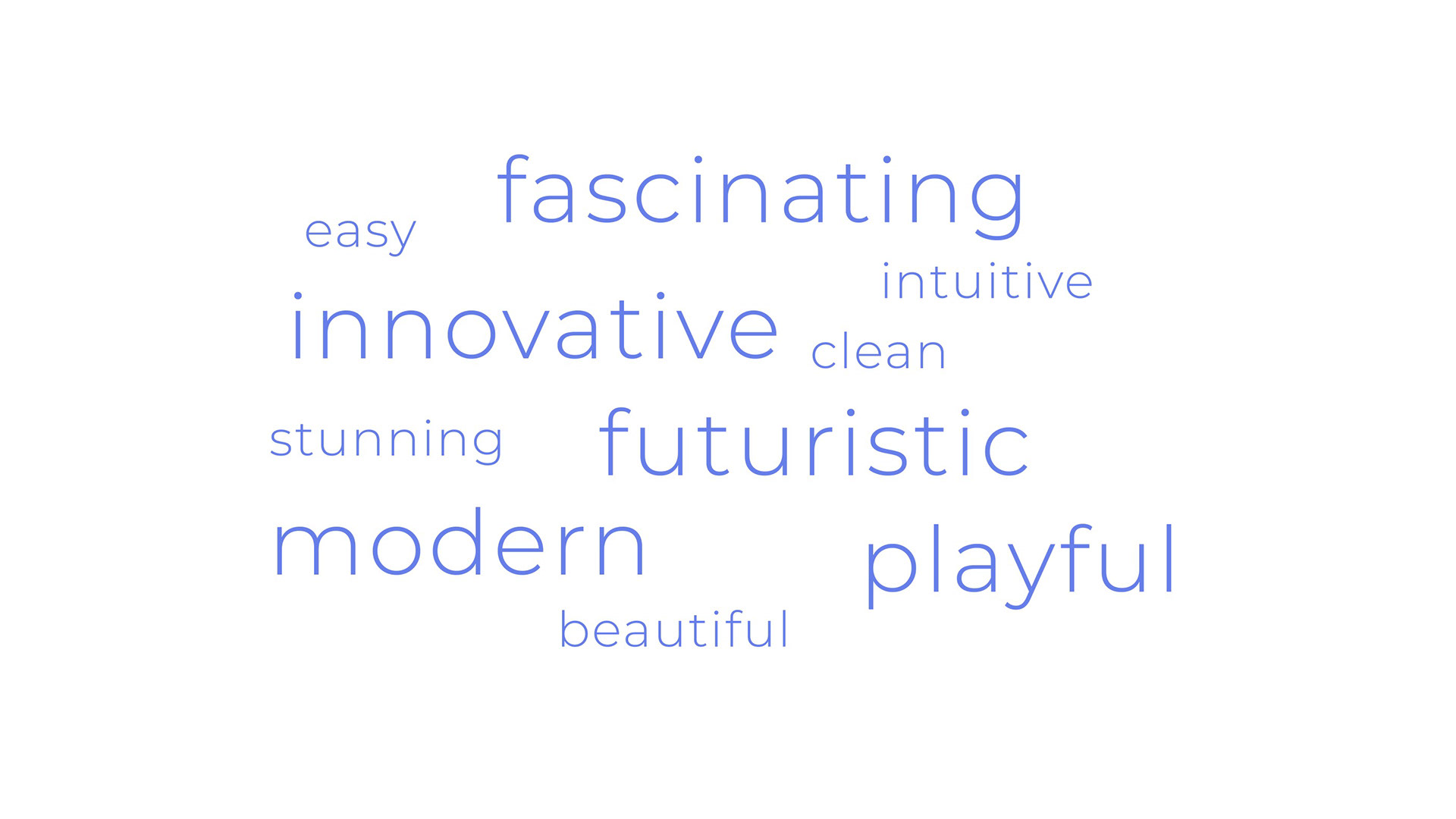
Wording style guide
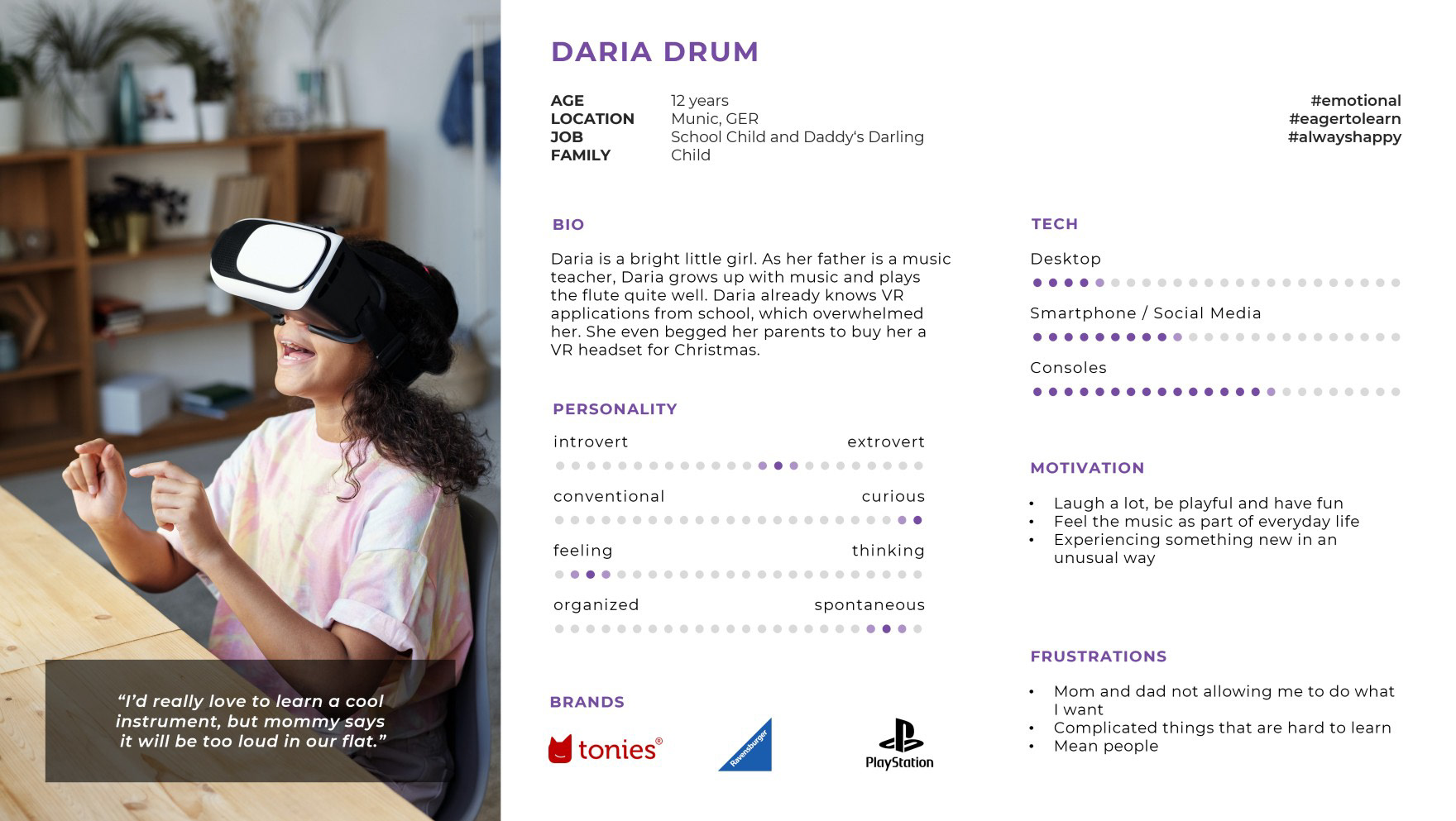
Persona Daria Drum
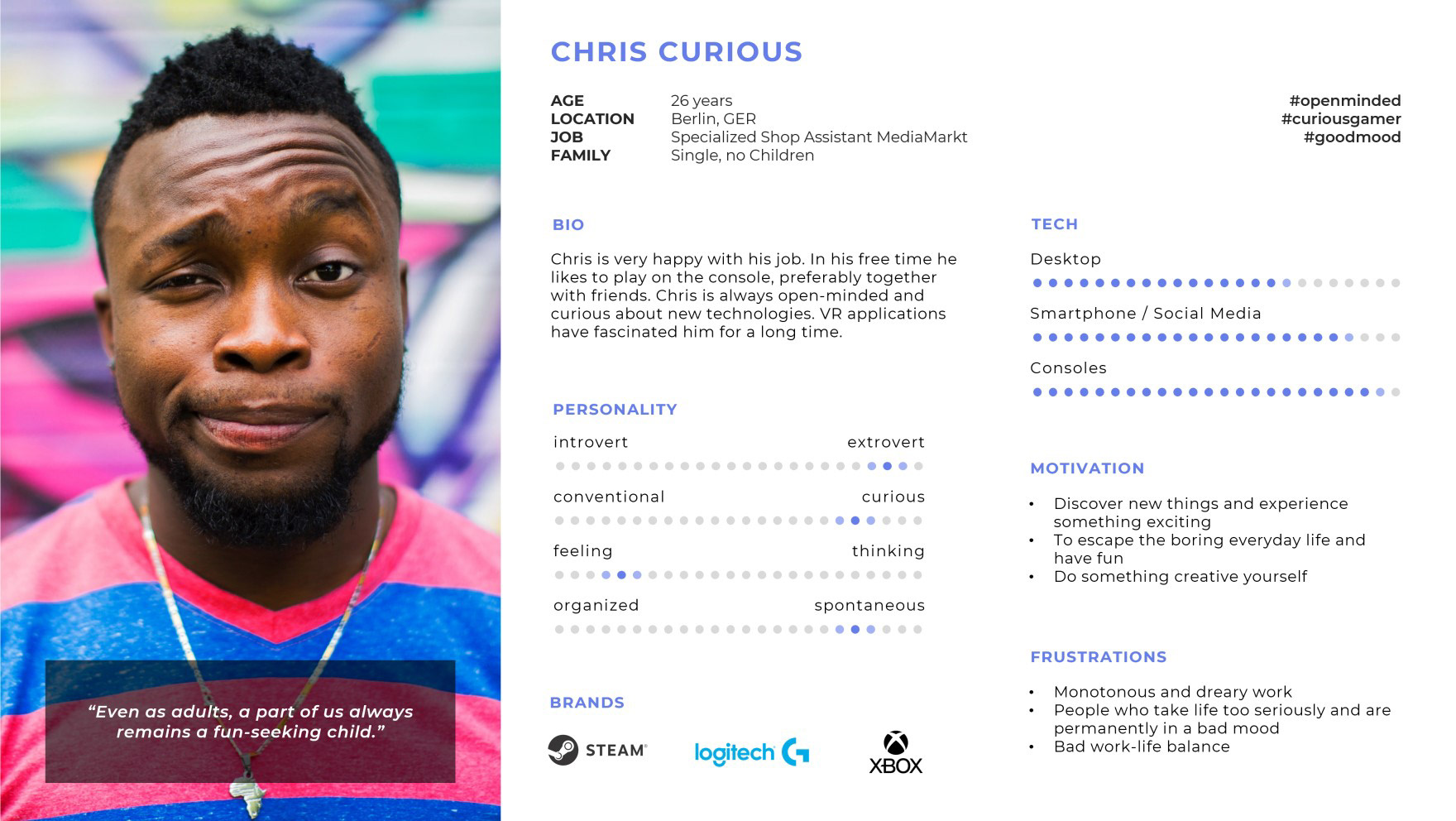
Persona Chris Curious
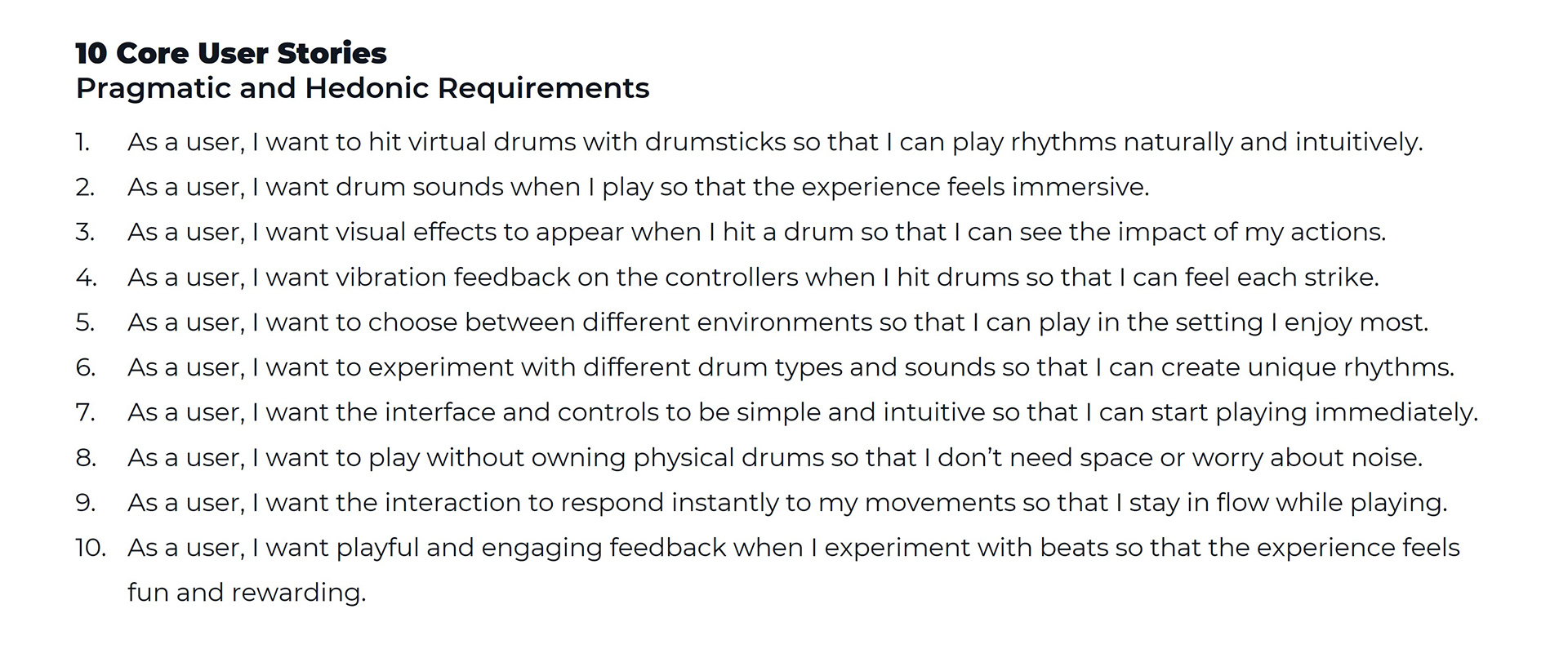
Core user stories
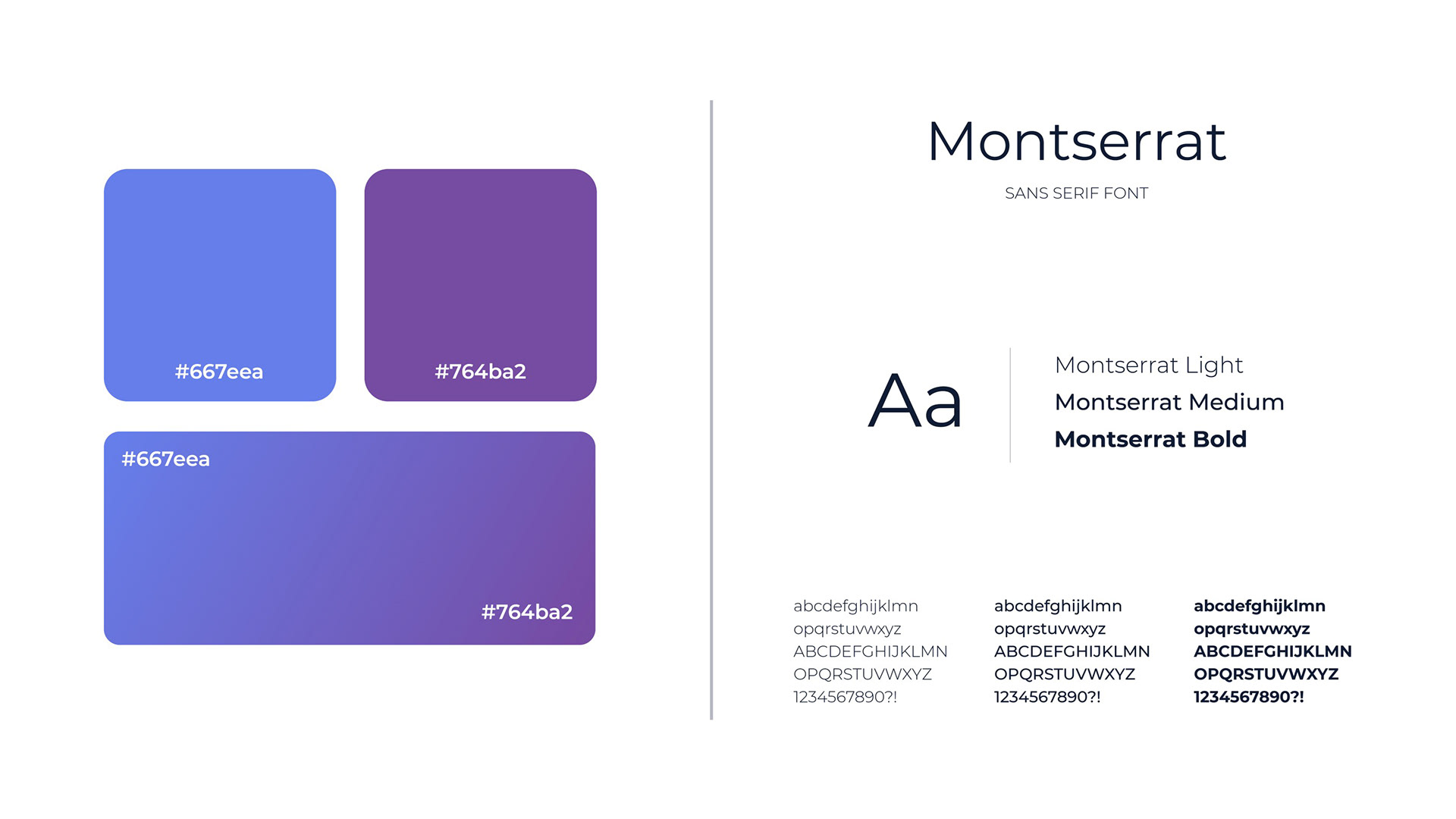
Color concept and typography
Implementation
VRDrums offers three immersive environments: a futuristic space, an idyllic forest, and the grand concert hall of the Elbphilharmonie, which can be selected via a menu. Users interact via VR controllers. Each scene features unique drum sets, drum sounds, visual effects, 360-degree backgrounds, and ambient sounds to enhance realism. The application was built in Unity with C#, 3D models in Blender, content managed via GitHub, and assets created with Adobe Creative Cloud. It runs on the HTC Vive.
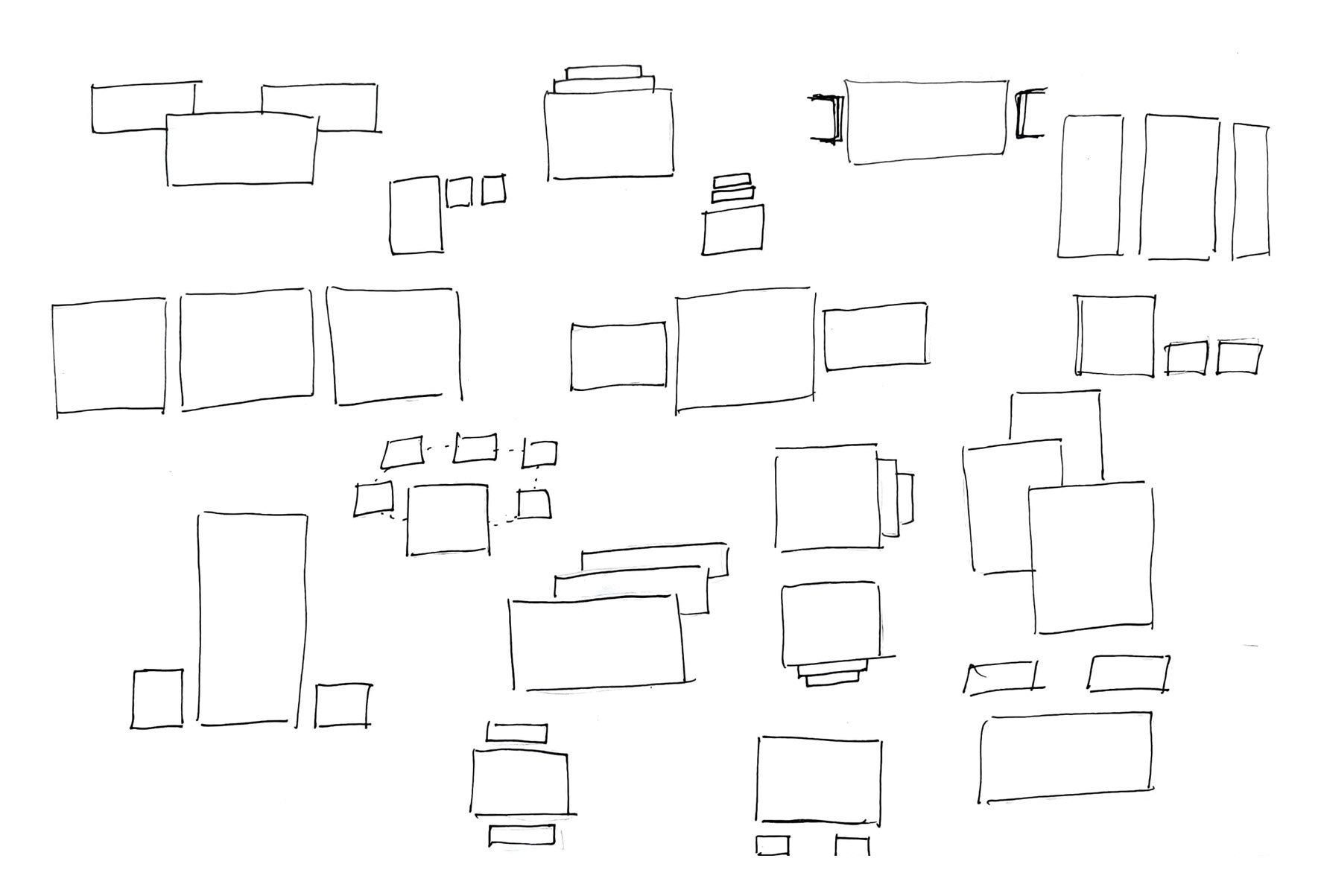
Variants for the menu structure
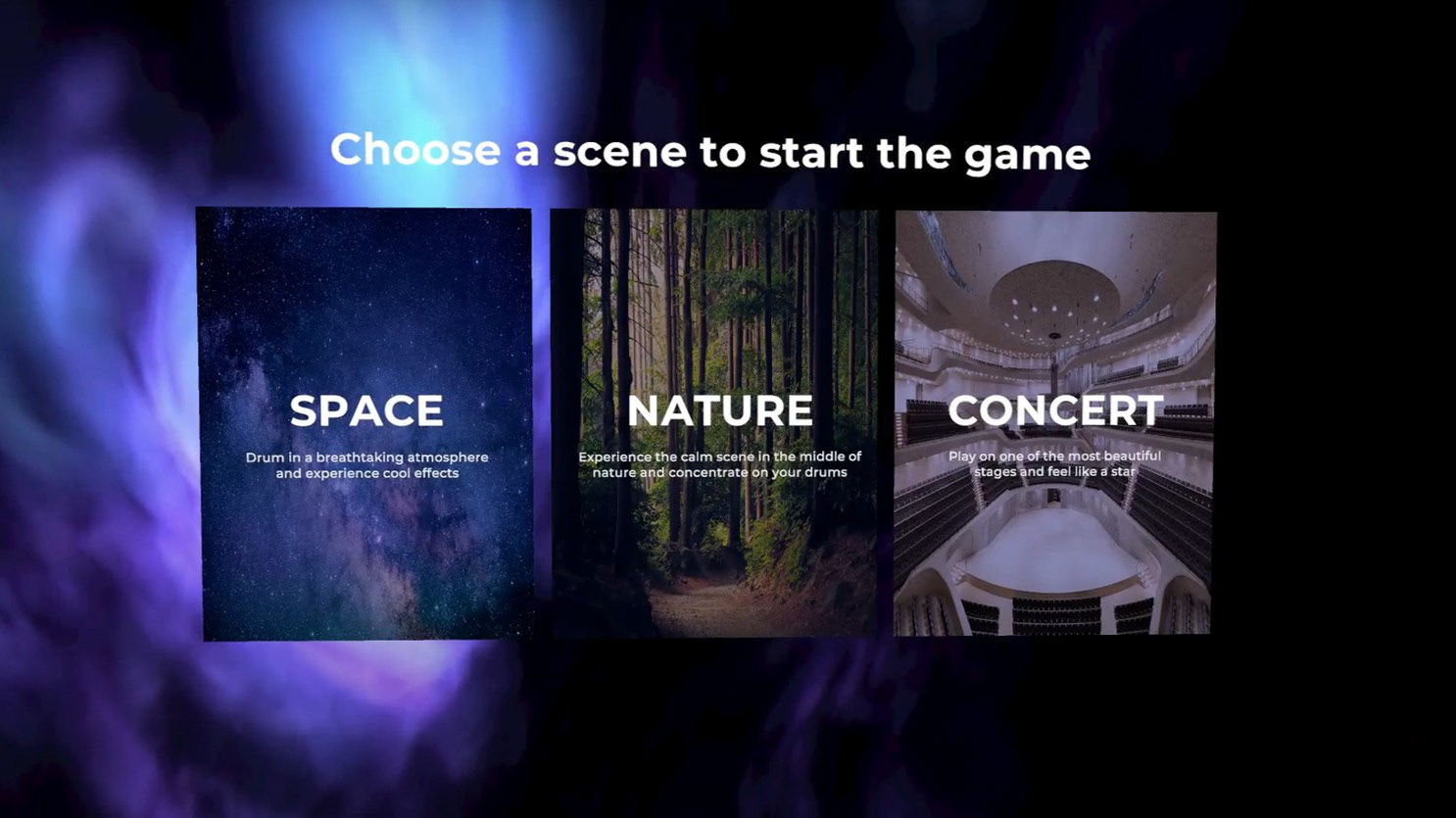
Implemented menu
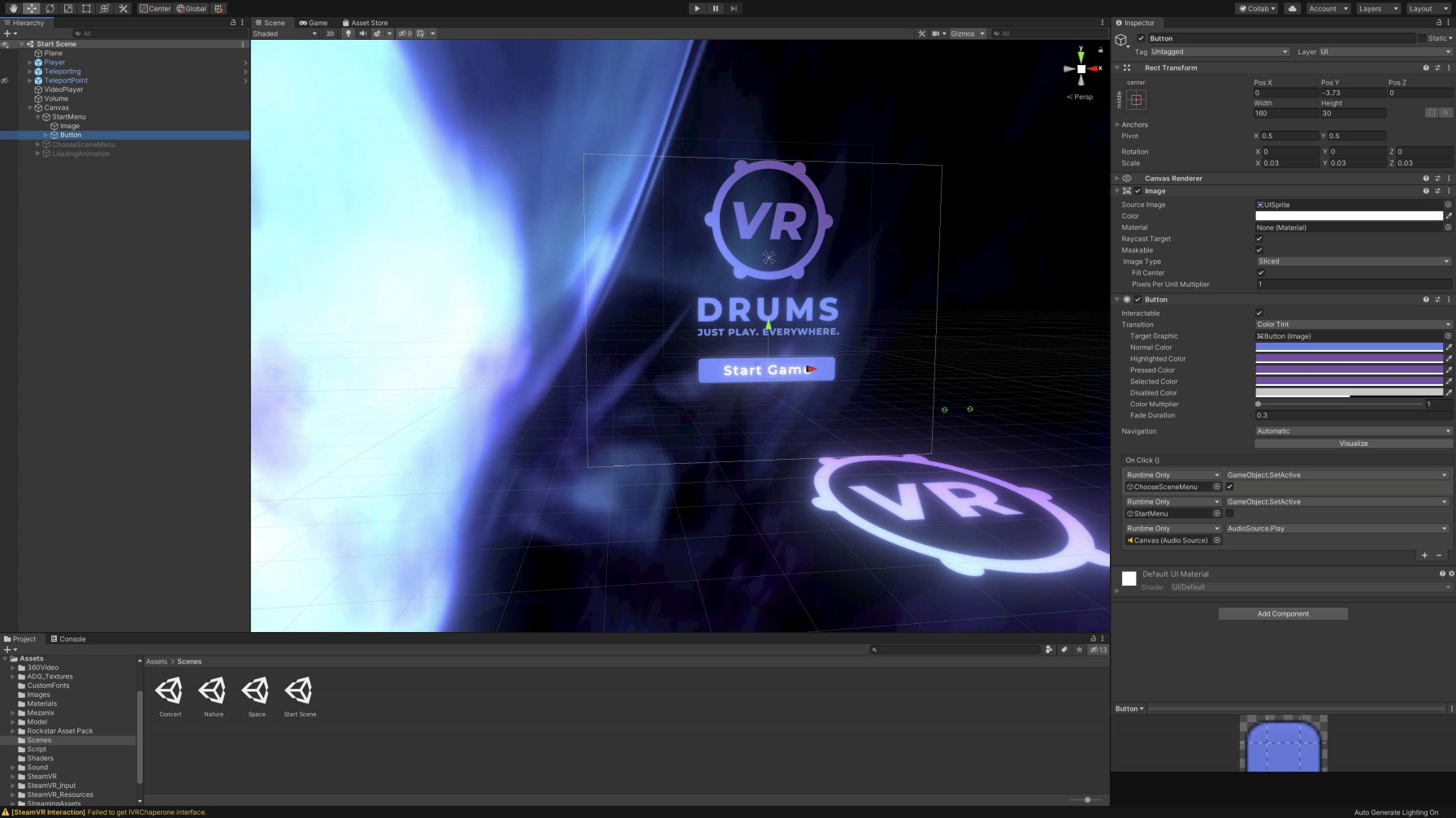
Implementation in Unity
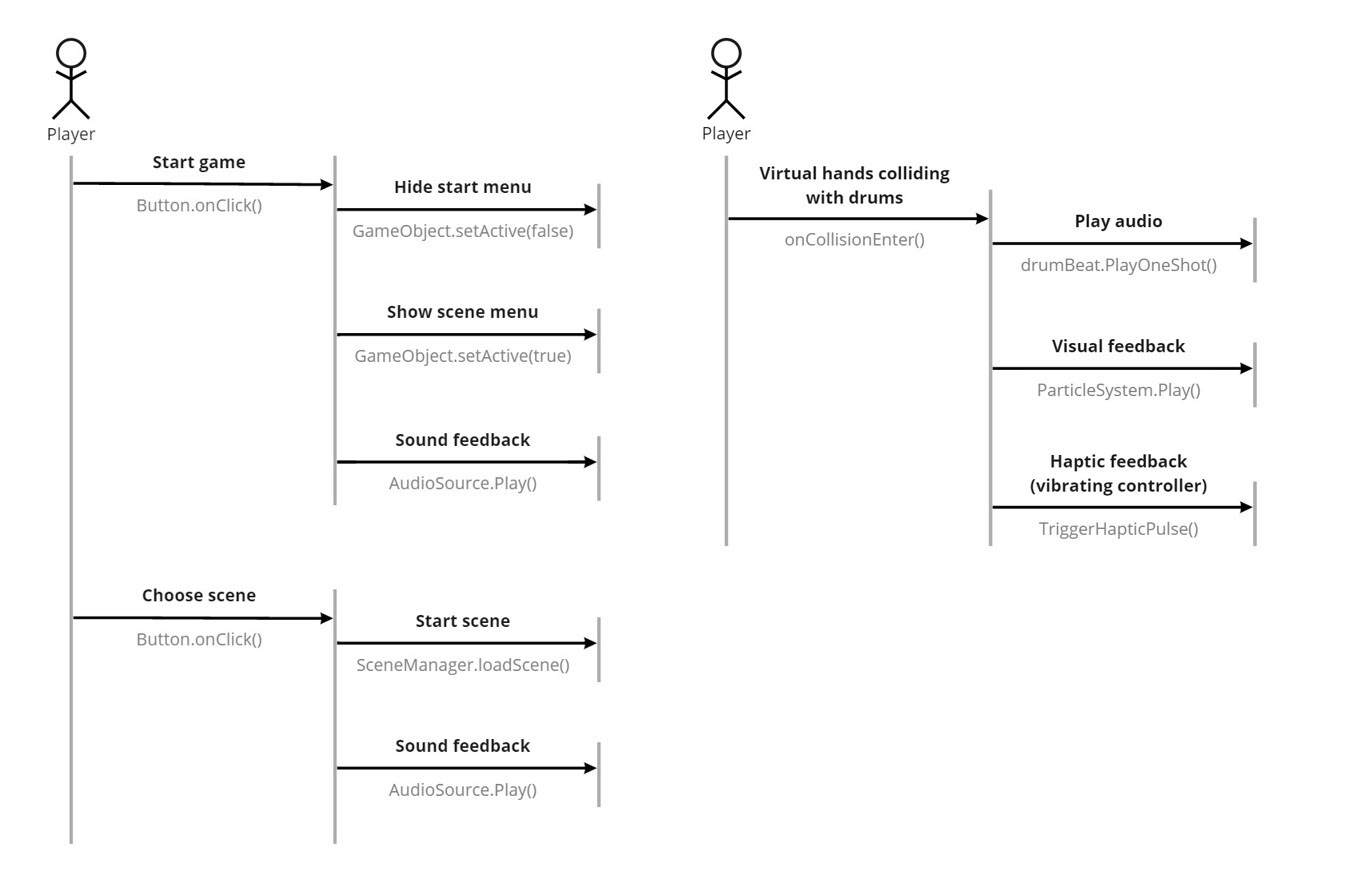
Sequence diagrams
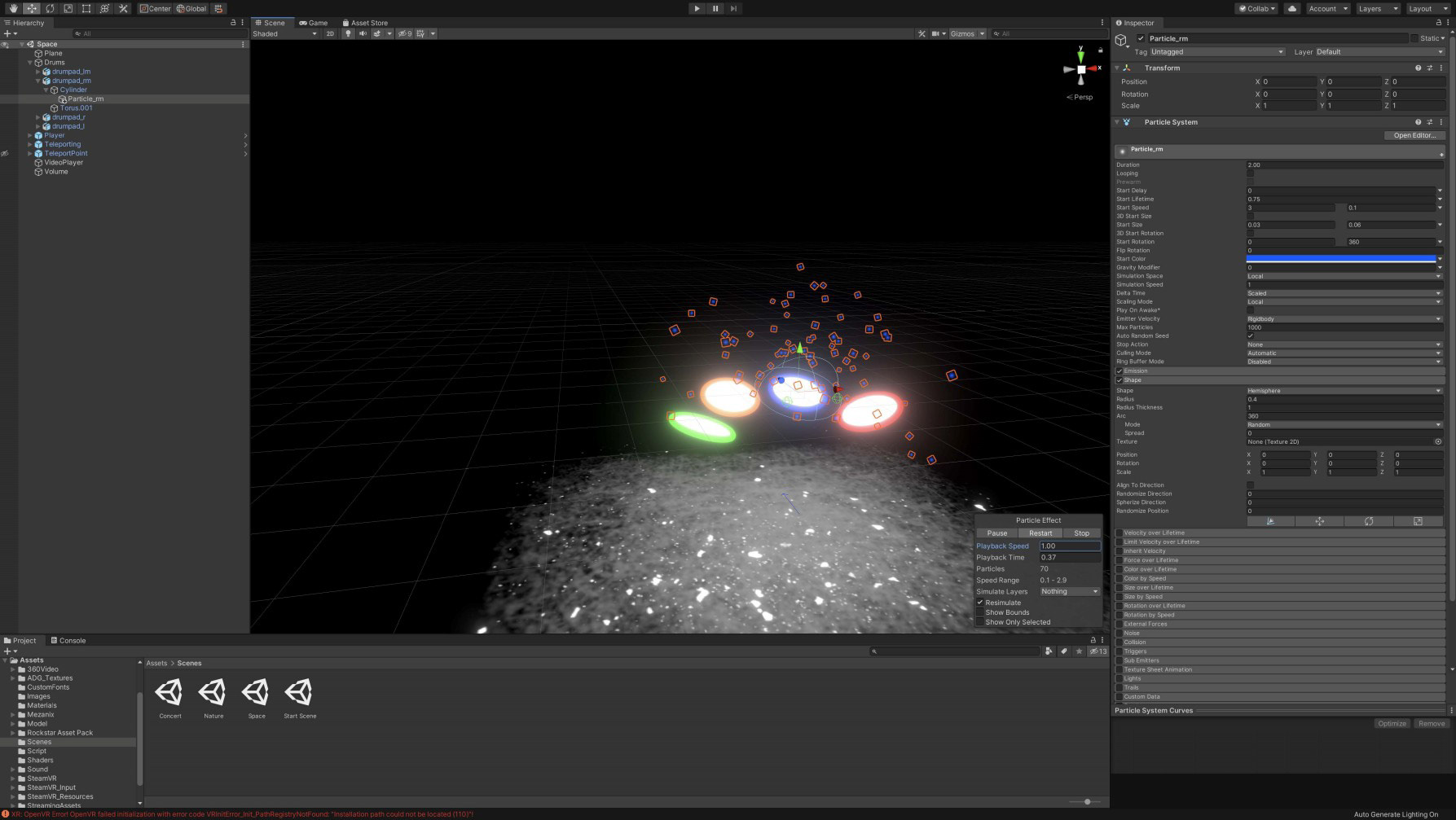
Particle system in Unity
Usability Testing
We evaluated VRDrums in iterative test cycles with eight participants. Using a mixed-methods approach, users explored the application freely and subsequently assessed it using the standardized AttrakDiff questionnaire to measure perceived product quality. Observations and short informal interviews complemented quantitative data to capture behavior and subjective impressions.
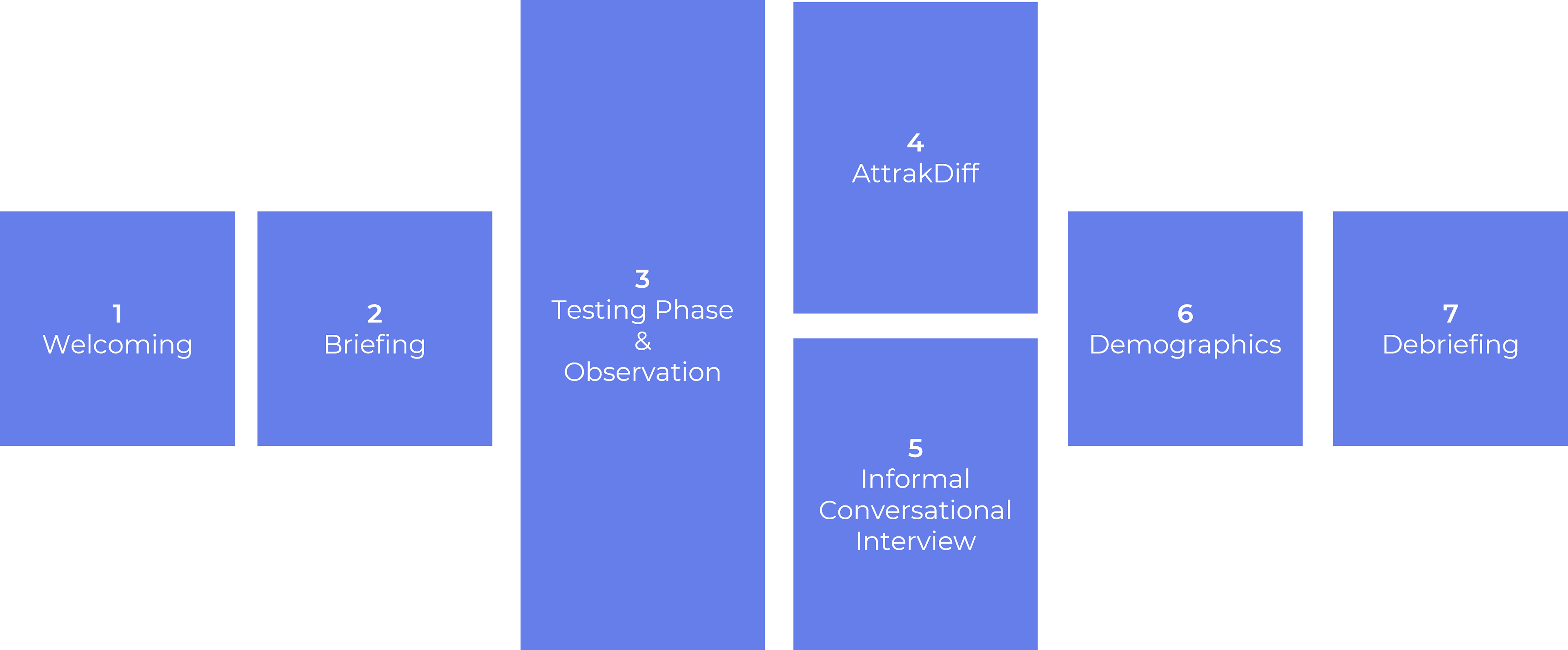
Study schedule
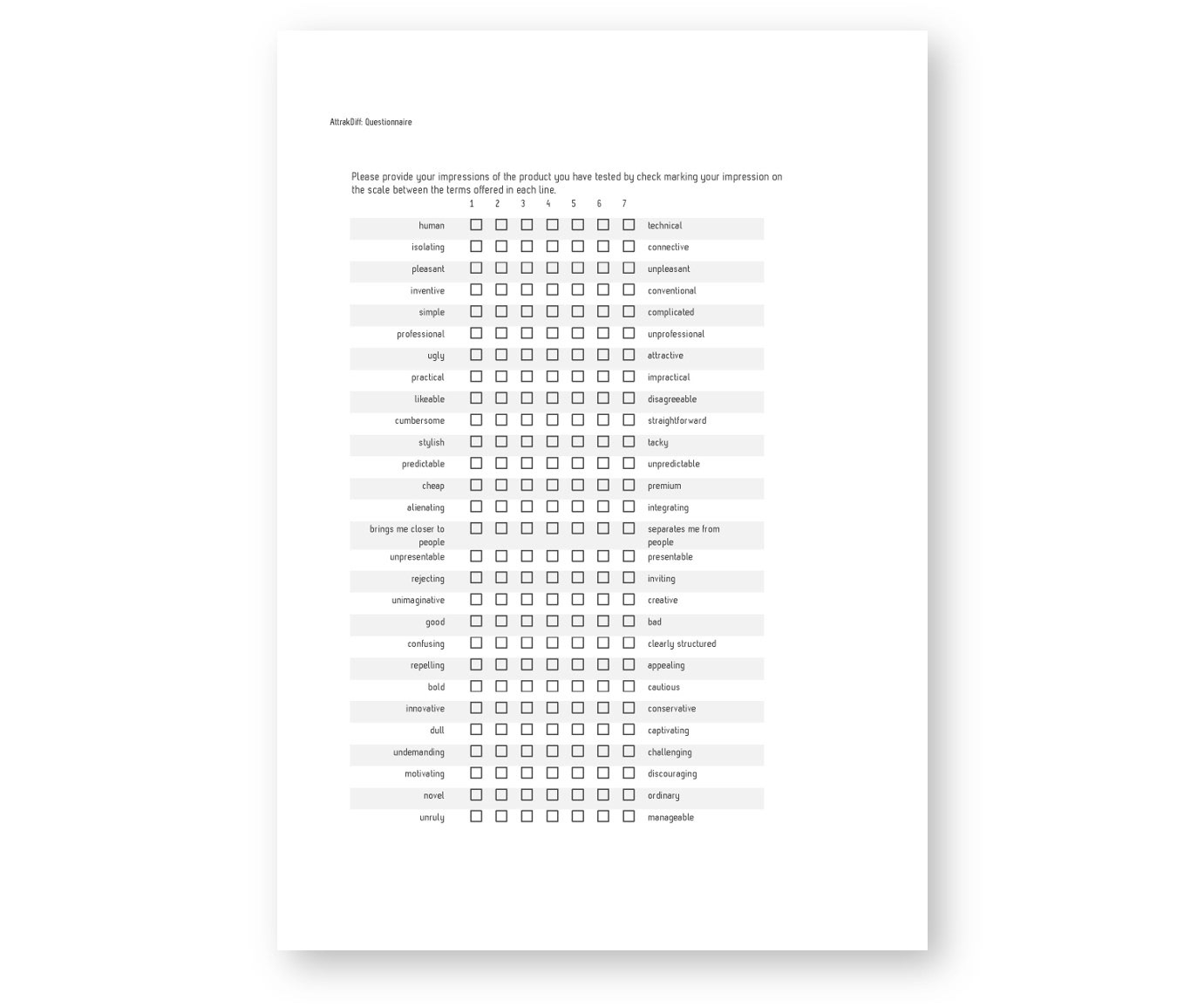
AttrakDiff questionnaire
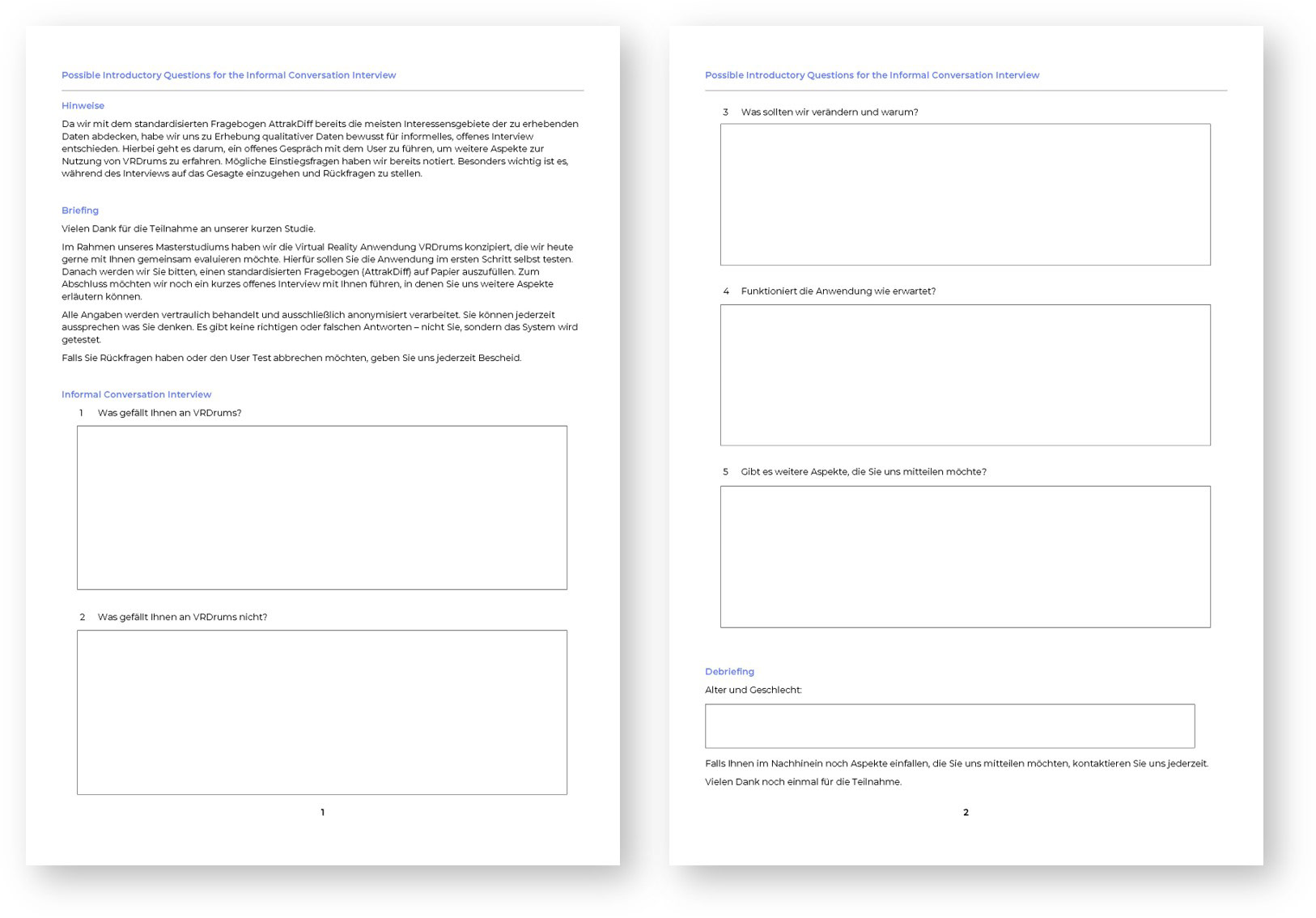
Interview guide
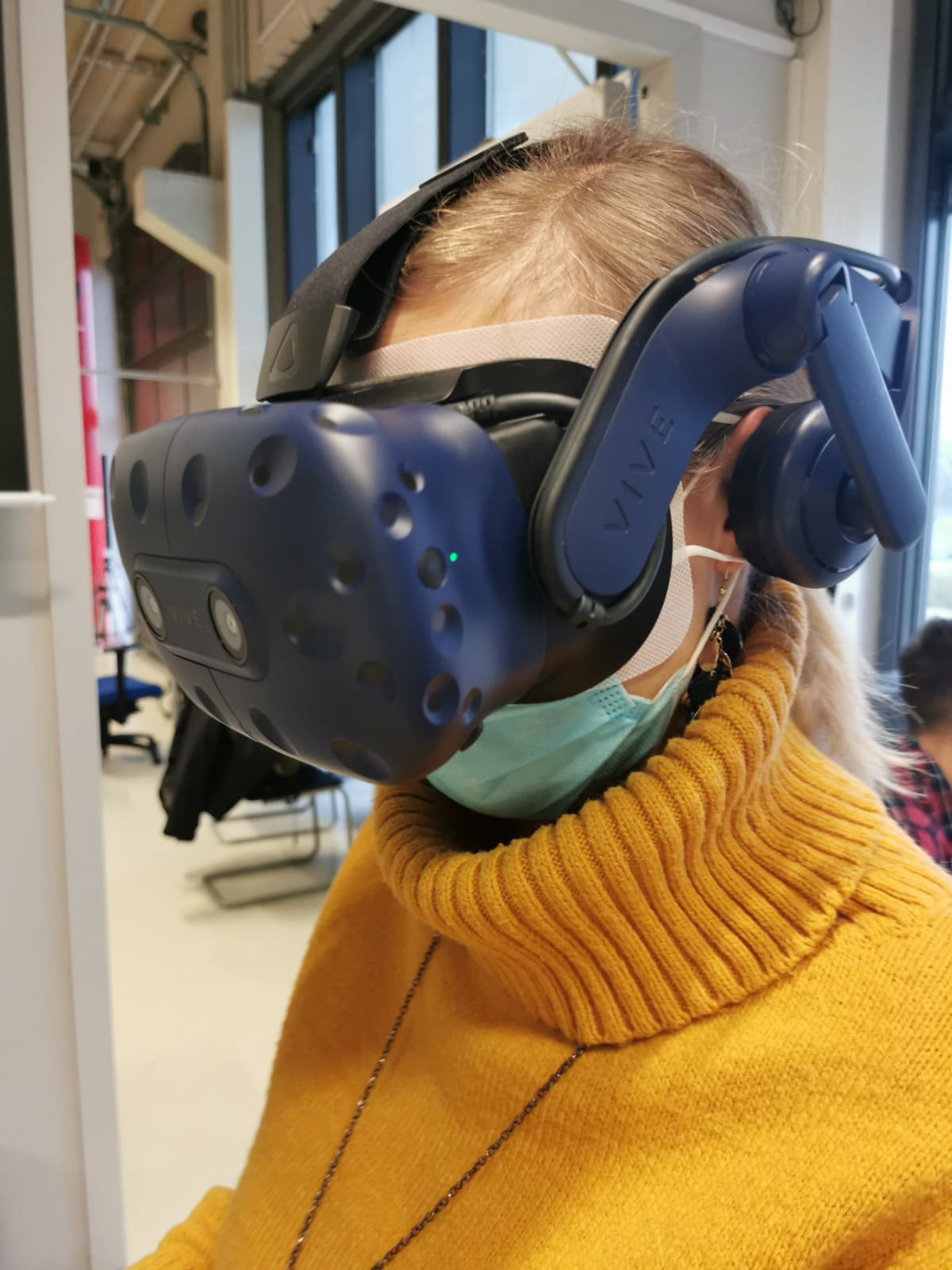
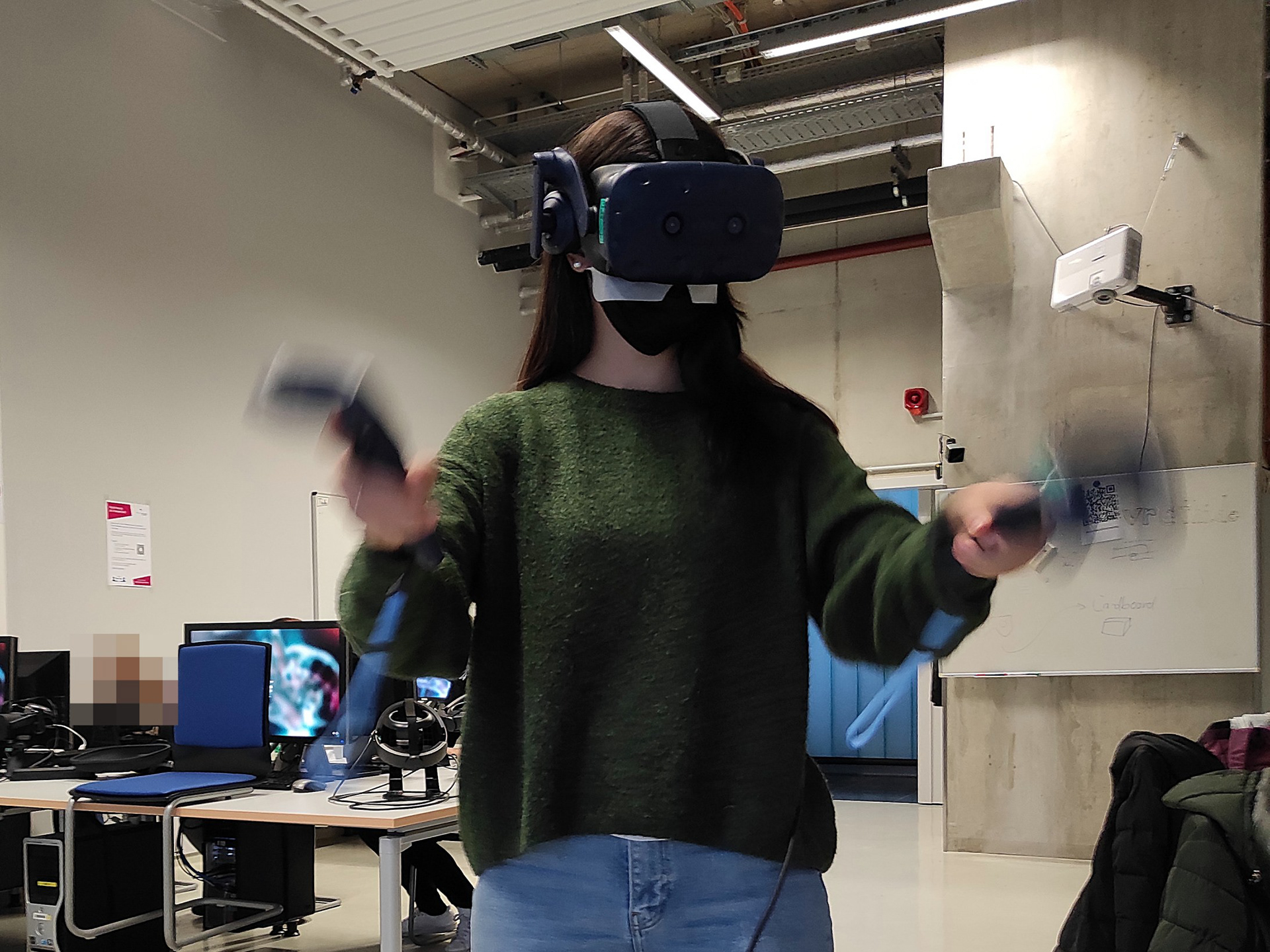
Usability testing in the VR lab at TH Ingolstadt
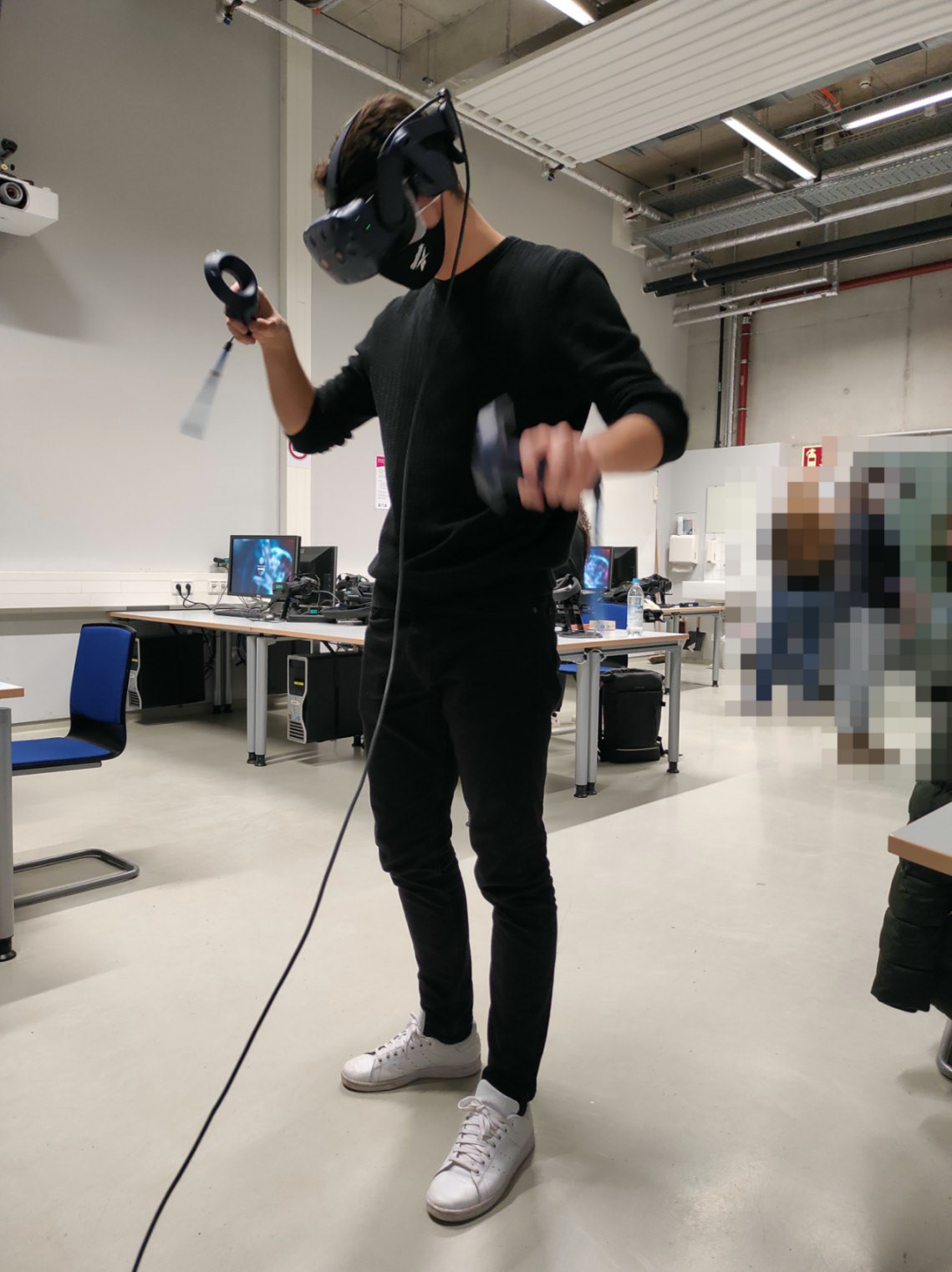
Usability testing in the VR lab at TH Ingolstadt
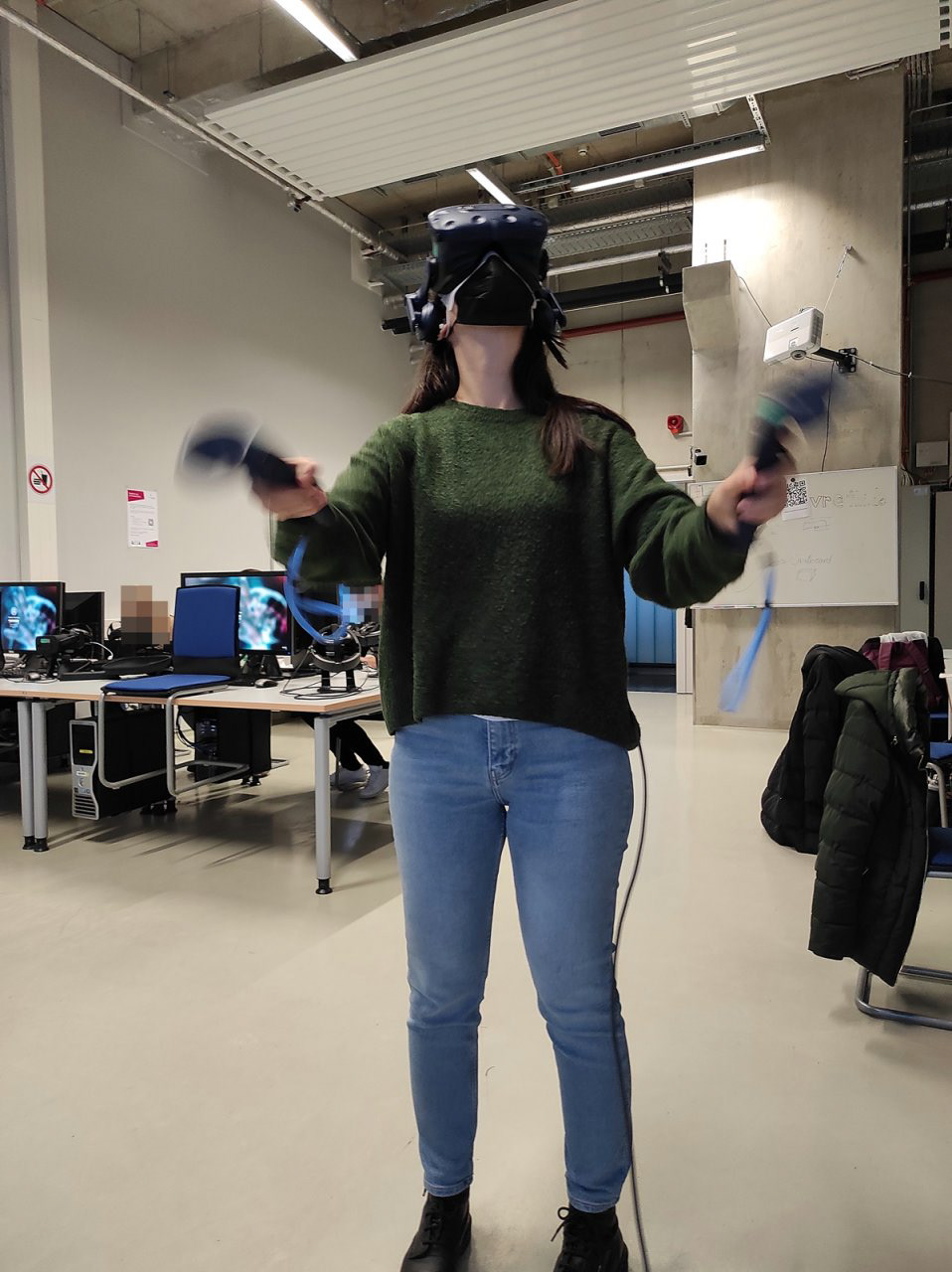
Usability testing in the VR lab at TH Ingolstadt
Usability testing in the VR Lab at TH Ingolstadt
Results & Impact
AttrakDiff results showed overall positive ratings across all four dimensions, confirming usability and hedonic appeal. Outliers such as “technical” and “isolating” reflected VR characteristics rather than design flaws. Qualitative feedback led to some improvements: expanded sound variety, velocity-based volume control, calibrated drum positioning, and adjusted hand rotation. These refinements improved precision and immersion.
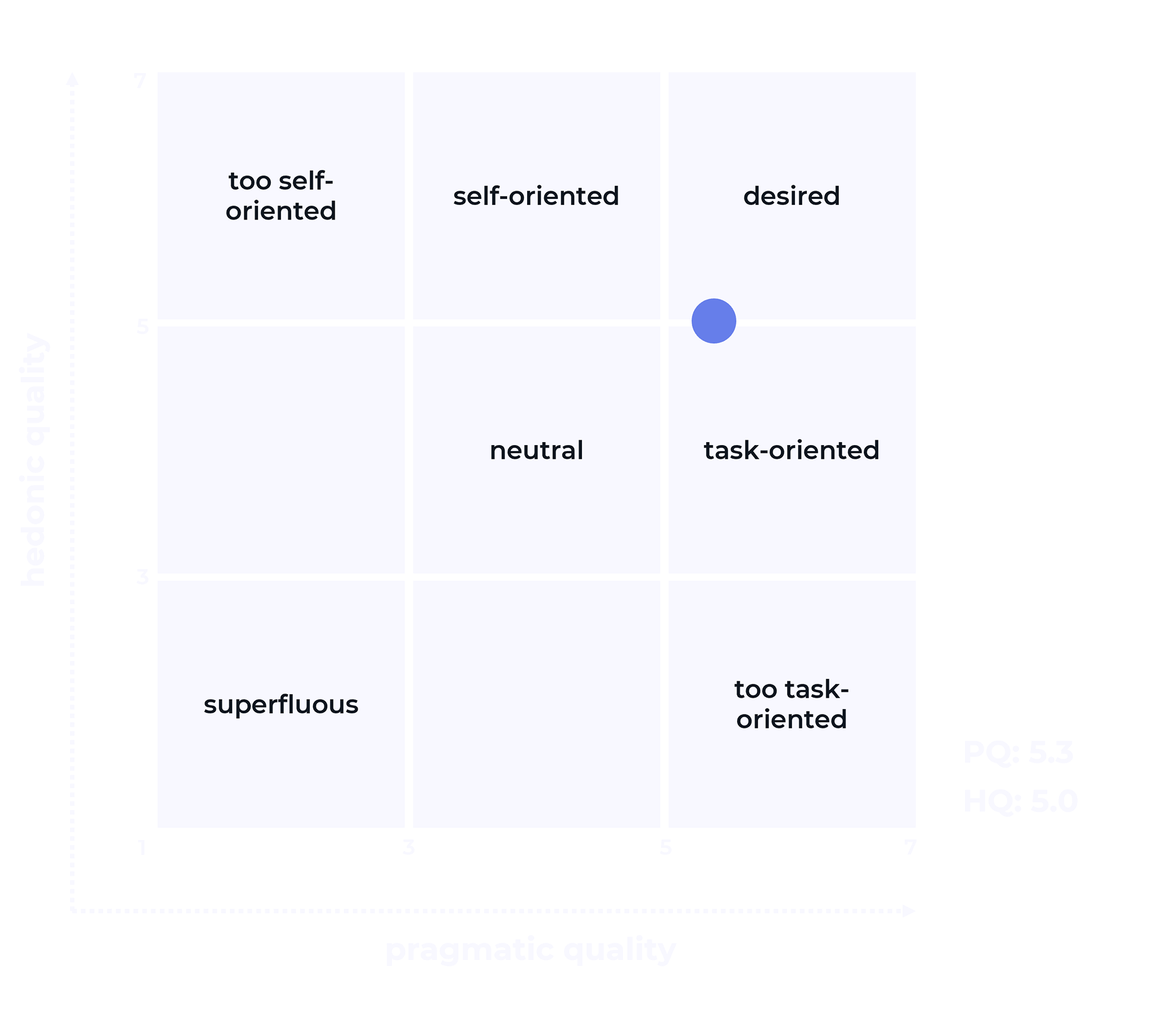
Portfolio graphic (hedonic and pragmatic quality)
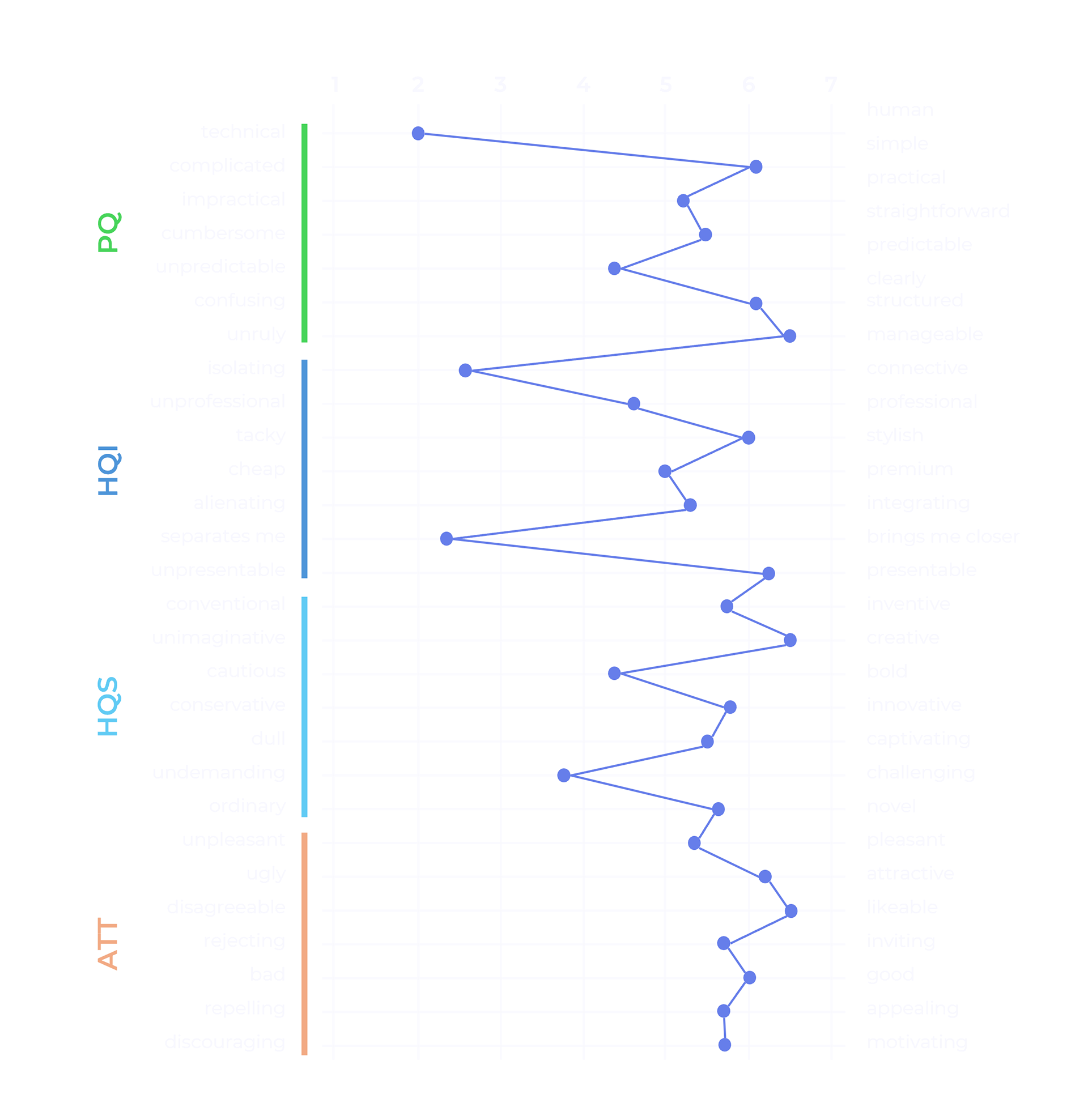
28 opposing word pairs (semantic differential)
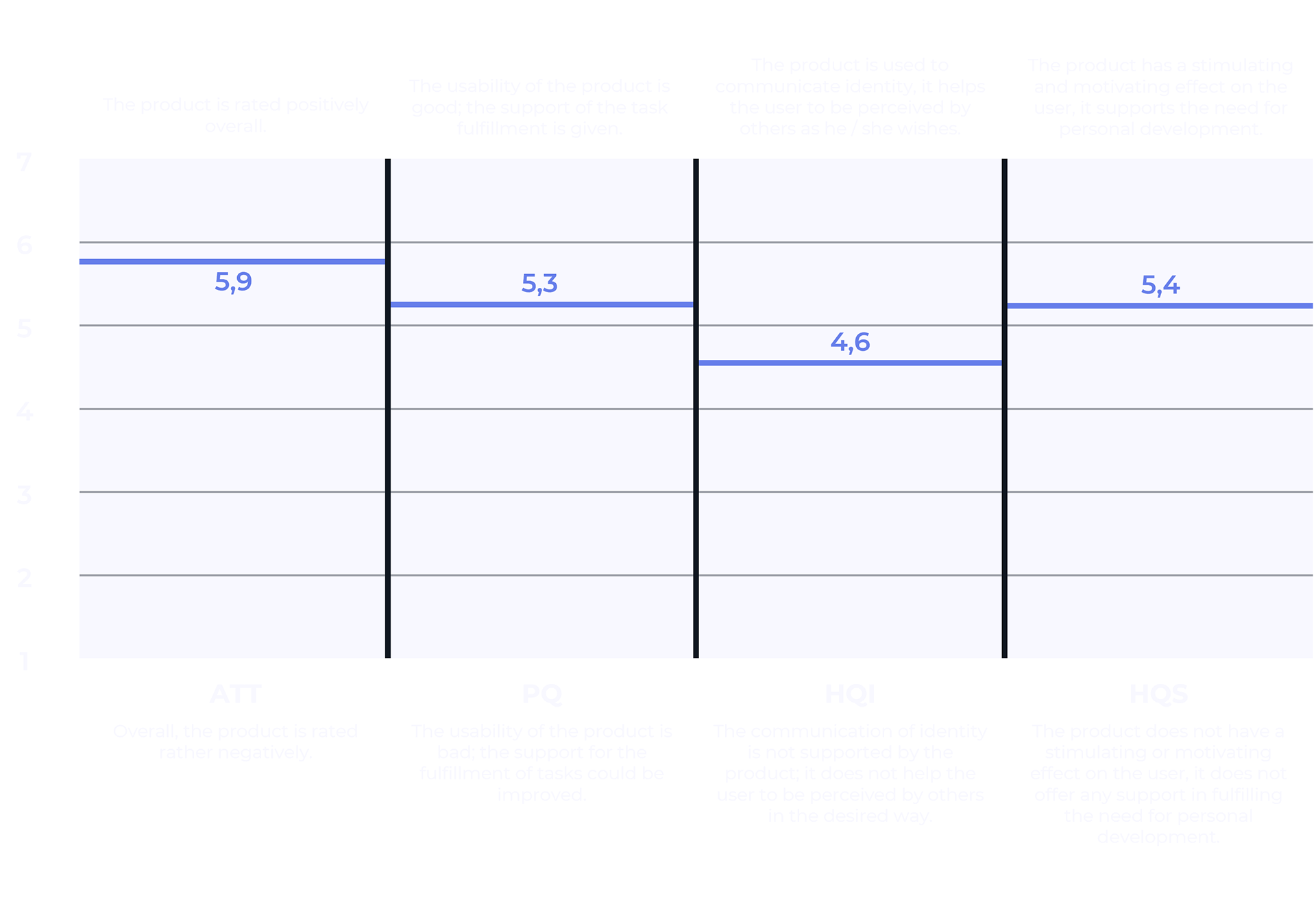
Dimensions Attractiveness (ATT), Pragmatic Quality (PQ), Hedonic Quality Identity (HQI) and Hedonic Quality Stimulation (HQS)
Conclusion
VRDrums demonstrates how VR can deliver an intuitive and immersive drumming experience without the need for physical equipment. Interaction through VR controllers, combined with acoustic, visual, and haptic feedback, creates a responsive and engaging experience. Iterative testing confirmed that interactions were easy to understand, feedback was clear, and both practical and experiential user needs were met.
Future iterations could extend the experience with foot controls, guided rhythm cues, learning support, and multi-user sessions. Demo sequences were recorded using mouse control to illustrate the interaction outside of VR.
Demo of the menu
Demo of the nature scene
Demo of the space scene
Demo of the concert scene